Harmonicode Games: What They Are and How They Work
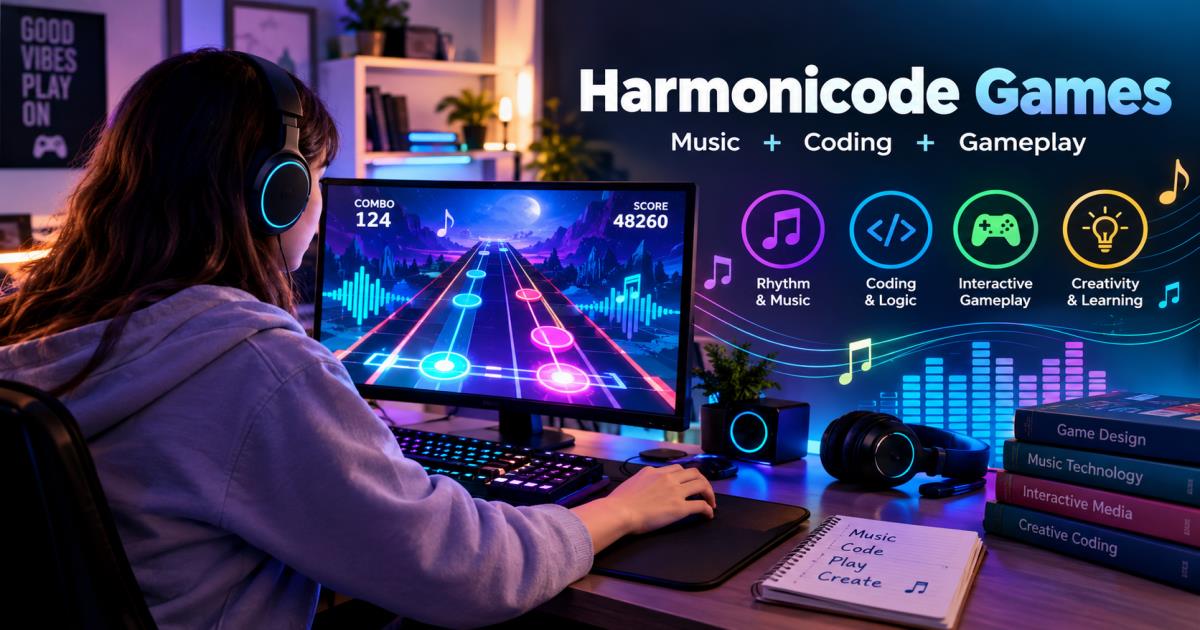
Harmonicode games turn music into the main system players interact with. Rhythm, patterns, and sound rules decide what happens next. A player taps, moves, or builds sequences in time with the beat, and the game answers with clear audio and visual feedback. This approach mixes elements from rhythm titles, musical puzzles, and simple logic challenges. It is not one single large studio with a long list of famous releases. It describes a style of play and a group of tools and games that treat sound as a core rule rather than background noise.
Players who enjoy timing challenges, pattern work, or hands-on music practice often find these experiences rewarding. The same skills that help someone keep a steady beat also support focus and memory. Real examples include motion-based rhythm games, dungeon crawlers locked to music, and browser tools that display falling notes for piano practice.
What Are Harmonicode Games?
Understanding the Meaning of Harmonicode Games
The word joins two ideas. Harmony points to rhythm, melody, and how sounds fit together. Code points to patterns, sequences, and the rules that make a system respond in a consistent way. In these games, players listen for cues, match timing, and follow or build short sequences that produce sound. Correct actions usually unlock richer audio, higher scores, or the next section. Mistakes produce a clear signal so the player can adjust on the next try.
Is Harmonicode a Gaming Platform, Studio, or Game Concept?
It works mainly as a concept and style. Some small projects and browser platforms use similar names for music practice tools. One common type shows falling notes over a virtual keyboard and supports a MIDI controller or computer keys. Other descriptions online treat it as an indie approach that links audio and visuals tightly. You will not find a long catalog of big-budget titles under one company logo. What you will find is a shared design choice: music drives the rules.
How Harmonicode Games Differ From Traditional Video Games
In most standard games, you can lower the music volume and still finish the level. Here the soundtrack and sound design form part of the challenge itself. Miss the beat and progress slows or stops. Match the pattern and new options appear. The feeling is closer to playing along with a track or solving a puzzle that makes noise than to simply guiding a character through a map.
How Do Harmonicode Games Work?
How Music, Rhythm, and Gameplay Work Together
Music sets the pace and the goals. A steady beat tells the player when to act. A melody can signal the right order of moves. Tempo changes raise or lower the difficulty. Because the audio and the challenge stay linked, players stay focused on the track.
How Player Actions Influence Sound and Game Mechanics
Hit a note or finish a pattern correctly and the game often adds richer sound, visual effects, or progress. Wrong timing can create a dissonant tone, a score drop, or a reset. Some designs let players shape the music by adding layers or changing short phrases that become part of the level.
Understanding the Role of Coding and Interactive Technology
In this context, “code” typically does not refer to writing lengthy text-based programs. It usually means following or building logical sequences: if this note plays, then perform that action. Interactive systems connect the player’s input (keys, touch, controller, or MIDI) to the sound and score in real time. Better versions watch accuracy and adjust the challenge.
How Levels, Challenges, and Scoring Systems Work
Early levels teach basic timing with simple patterns. Later ones add layers, faster tempos, or memory tasks. Scoring typically rewards accuracy and consistency. Many titles give instant feedback so players can correct mistakes on the next attempt. On average, short repeated practice sessions improve timing faster than long frustrated ones.
Key Features of Harmonicode Games
Rhythm-Based Gameplay and Musical Challenges
Timing sits at the center. Players stay with the beat while handling movement or short decisions. Games like Beat Saber require players to slice blocks in rhythm with the music using motion controls. Crypt of the NecroDancer locks every step and attack to the beat of the soundtrack.
Interactive Sound Design and Real-Time Feedback
Every correct or incorrect action produces a clear audio response. This tight loop helps players learn by ear as much as by eye. Browser tools that display falling notes over a piano keyboard give the same kind of immediate signal.
Puzzles, Pattern Recognition, and Problem-Solving
Many levels ask players to rebuild a melody, complete a sequence, or arrange elements so the result sounds right. These tasks train the same pattern skills used in basic music theory and simple logic work.
Adaptive Difficulty and Personalized Gameplay
Systems that track accuracy can slow the tempo, add support, or tighten the timing window. Beginners receive more room to learn. Experienced players face stricter requirements. This keeps the challenge in a useful range for most people.
Creative Freedom and Player Engagement
Some experiences let players compose short pieces, remix tracks, or explore open sound tools. The activity then feels closer to creation than pure testing. Players who like to experiment often stay longer with these versions.
Types of Gaming Experiences Associated With Harmonicode
Music and Rhythm-Based Games
These focus on precise timing and input synced to music. Motion, button, or touch controls all appear in this group. Popular examples test coordination while the track drives the action.
Musical Puzzle and Logic Games
Players solve problems where the solution must also sound correct. Matching notes, completing chords, or arranging patterns that form a phrase are common tasks. Rhythm Doctor turns timing into a series of logic-style puzzles.
Interactive Music Creation Games
Tools and games let players build music through play. Visual feedback and simple rules guide the process. Browser-based piano trainers that support MIDI keyboards belong here.
Coding and Educational Games
These introduce sequencing and pattern logic through musical output. They suit younger players or anyone new to both music and basic structured thinking. The output is sound rather than text code, which keeps the activity approachable.
How to Play Harmonicode-Style Games: A Beginner’s Guide
Step 1: Find a Legitimate Game or Gaming Platform
Start with known stores and sites. Steam, console stores, major app stores, and established browser tools are safer choices. Search for specific rhythm or music-practice titles rather than relying only on the harmonicode label. Avoid random download sites that mix music claims with unrelated content.
Step 2: Understand the Controls and Gameplay Objectives
Most titles use simple inputs: keyboard keys, on-screen buttons, touch, or a MIDI controller. Learn what each input does and what the level asks for—match the notes, keep the beat while moving, or finish the pattern.
Step 3: Follow Musical Patterns and Complete Challenges
Listen to the demo if one exists. Then play along. Focus on steady timing rather than speed at the start. Many games show the pattern first so players can prepare.
Step 4: Improve Your Timing, Accuracy, and Skills
Replay levels. Use practice or slow-down modes when available. Short, regular sessions build skill faster than long ones. Over time the ear and the hands improve together. Players who treat early levels as practice rather than high-score attempts typically progress more smoothly.
Examples of Games With Similar Music-Based Mechanics
Rhythm Games That Test Timing and Coordination
Beat Saber uses VR motion to slash blocks on the beat. Crypt of the NecroDancer turns a dungeon crawl into a rhythm challenge where every move must match the music. osu! demands precise clicking and circling in time with the track. These titles show how rhythm can drive the entire system.
Music Puzzle Games That Challenge Your Thinking
Rhythm Doctor builds levels around careful timing and pattern logic. Other experimental games ask players to reconstruct or change musical sequences to open new areas.
Creative Games That Combine Sound and Interaction
Browser tools that display falling notes and accept MIDI input let players practice real songs while receiving instant feedback. Open-ended sound toys and simple composition games also fit this group. They reward exploration as much as accuracy.
Benefits of Playing Harmonicode-Style Games
Developing Rhythm and Musical Awareness
Repeated practice improves timing, beat recognition, and the ability to hear patterns inside music. Players often notice better awareness of tempo in everyday listening.
Practicing Focus, Memory, and Pattern Recognition
Players must hold sequences in mind, stay present with the track, and notice small changes. These skills support other kinds of learning and daily tasks that require attention.
Encouraging Creativity and Problem-Solving
When players can shape sound or solve musical logic problems, they practice flexible thinking. The clear audio feedback makes the results easy to judge.
Making Music Learning More Interactive
Traditional practice can feel repetitive. Turning notes and timing into a game with clear signals helps many people continue longer. It works best as a supplement to structured study rather than a full replacement.
Harmonicode Games vs. Traditional Rhythm Games: Key Differences
Traditional rhythm games often focus on high-score performance and precise input on a fixed track. Harmonicode-style experiences usually add stronger elements of logic, pattern building, or creative output. Music remains central, but the pattern and rule side receives more attention. The result can feel like a mix of instrument practice, puzzle solving, and light structured play. Some titles stay pure timing challenges; others lean toward educational or creative goals.
Are Harmonicode Games Free, Safe, and Accessible?
Where Can You Find Harmonicode Games?
Look for browser-based music tools, major digital storefronts, and well-known educational or indie platforms. Searching for concrete rhythm or music-learning titles usually yields better results than searching only the harmonicode label, because the term appears in many different contexts online.
Can You Play on PC, Mobile, or Consoles?
Yes. Many similar experiences run in modern browsers with no download. Others appear on phones, tablets, PC stores, and consoles. MIDI support is more common on PC and certain browser tools.
How to Identify Legitimate Games and Avoid Unsafe Downloads
Stay with official app stores, Steam, console stores, and known websites that explain their privacy practices clearly. Be cautious of sites that demand unusual permissions or push aggressive downloads. Read recent player comments and check that the game actually delivers music interaction rather than a generic label.
The Future of Harmonicode Games and Music-Based Gaming
AI and Adaptive Music in Interactive Games
Systems that listen to player performance and adjust the music or difficulty in real time are becoming more practical. This can create levels that feel personal and keep the challenge useful for different skill levels.
Emerging Trends in Rhythm and Audio-Driven Gameplay
More titles explore player-created sound, stronger links between audio and visuals, and tools that teach real musical skills while remaining playable. Browser technology continues to lower the barrier for both developers and players.
Opportunities for Game Developers and Players
Developers can build focused experiences that teach or entertain through music. Players gain new ways to practice timing, create short pieces, and stay engaged. The combination of clear feedback and musical rules continues to attract people who want both challenge and creativity.
Understanding Harmonicode Games and Their Potential
Harmonicode games link music, rhythm, and structured patterns into one playable system. Players who enjoy timing challenges, pattern work, or hands-on music practice find clear feedback and steady progress. Real examples from the broader rhythm and music-game space show how these ideas already work in popular titles and browser tools. Start with a legitimate, simple experience, listen carefully, practice in short sessions, and the combination of sound and play becomes easy to feel. The style continues to grow through indie experiments, educational tools, and established rhythm games that keep music at the center of the rules.
Frequently Asked Questions About Harmonicode Games
What exactly are Harmonicode Games?
They are interactive experiences that make music, rhythm, and logical patterns the main system of play rather than background elements.
Is Harmonicode Games a real gaming company?
It functions mainly as a concept and a label used by various small projects and platforms rather than one large, long-established studio with a famous list of titles.
How do Harmonicode Games work?
Player actions stay timed to or shaped by music. Correct timing and pattern completion produce sound and progress. Mistakes produce clear feedback. Some versions add simple sequencing or creative building.
Are Harmonicode Games free to play?
Many similar browser-based music tools and some rhythm titles offer free versions or free-to-play options. Full games or extra content on major stores may cost money.
Can beginners play Harmonicode Games?
Yes. Most start with simple patterns and offer practice modes. The early stages stay approachable when players focus on steady timing rather than speed.
Can you play Harmonicode Games on mobile devices?
Many rhythm and music-learning experiences have mobile versions. Browser tools also work on modern phones and tablets.
Do Harmonicode Games help you learn music?
They can improve rhythm, timing, pattern recognition, and basic note awareness. They work best as a helpful supplement to traditional practice and lessons.
What games are similar to Harmonicode Games?
Rhythm titles such as Beat Saber, Crypt of the NecroDancer, osu!, and Rhythm Doctor, plus browser-based piano and music practice tools that use interactive notes and real-time feedback.