
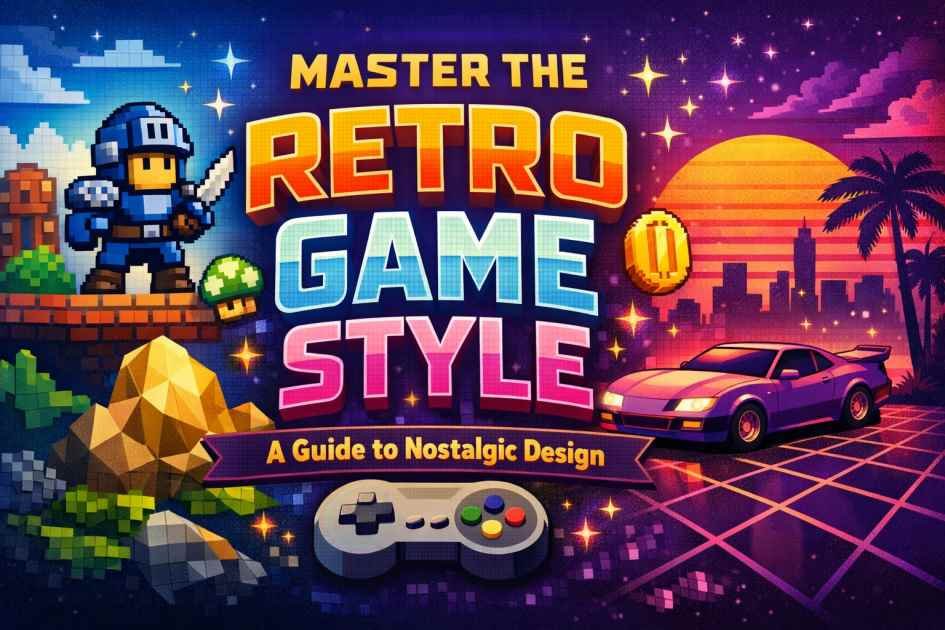
Master the Retro Game Style: A Guide to Nostalgic Design
Have you ever wondered why, in an age of ultra-realistic 4K graphics and virtual reality, we still find ourselves drawn to blocky pixels and beep-boop music? There exists a unique charm in being simple. The retro game style is more than just a trip down memory lane. It is a powerful artistic choice that focuses on gameplay, imagination, and a distinct visual charm that modern high-definition graphics sometimes miss.
This article explores the world of retro aesthetics. We will look at everything from the flickering lights of 8-bit adventures to the sharp edges of 3d retro game-style environments. Whether you are a player looking for that nostalgic spark or a creator wanting to understand the technical side of the past, this guide has you covered. We will dive deep into what makes this style work, why it remains popular on platforms like Google’s retro game style, and how you can identify the key elements that define an era.
What is Retro Game Style?
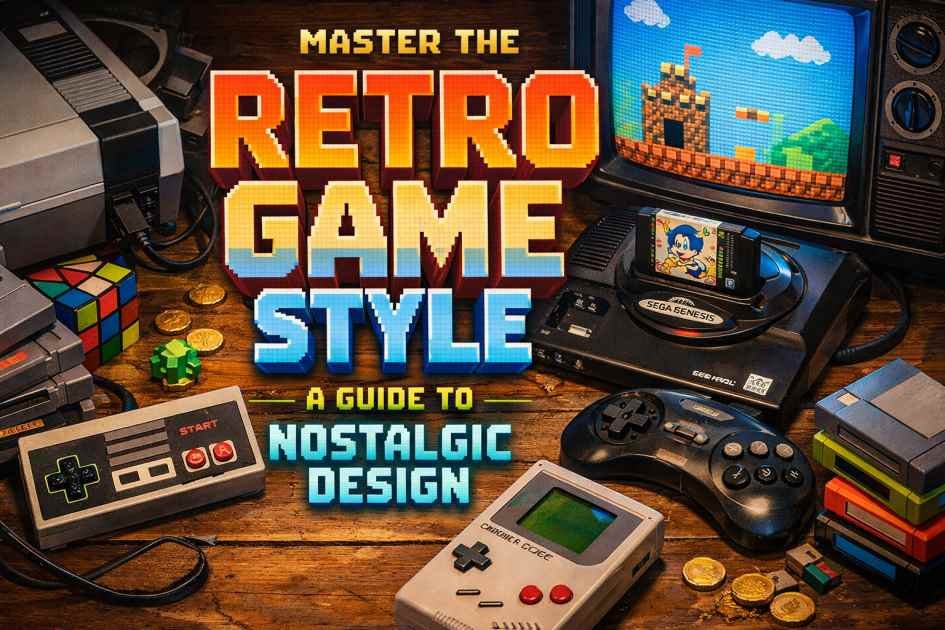
The retro game style refers to a visual and auditory design philosophy inspired by video games from the late 1970s to the late 1990s. During this time, hardware was limited. Computers and consoles could display only a few colors at once, and memory was very limited. To make games look good, artists had to be incredibly creative with every single pixel.
Today, those technical limitations are no longer mandatory, but they are still used deliberately as an “aesthetic.” Instead of trying to look real, these games aim to evoke a specific moment in history. This style is built on several pillars:
- Intentional Limitation: Using a small number of colors or simple shapes.
- Abstraction: Forcing the player to use their imagination to fill in the gaps.
- Consistency: Ensuring every part of the game world feels like it belongs to the same technological era.
Retro design is not just about being “old.” It is about a specific feeling. It is the digital equivalent of a vinyl record or a Polaroid photo. It feels warm, accessible, and focused.
The History and Eras of Retro Aesthetics
To understand the retro game style, we must look at the different “generations” of gaming. Each era brought a new set of tools and a new way to see digital worlds.
The 8-Bit Era: The Birth of the Pixel
This is the era most people think of when they hear “retro.” It was defined by consoles that used 8-bit processors. Because the resolution was so low, characters had to be made of large, visible blocks.
- Visuals: Very limited color palettes (often only 16 to 54 colors available).
- Sprites: Small characters that moved in “tiles.”
- Feel: High contrast and iconic silhouettes.
The 16-Bit Era: The Golden Age of Pixel Art
As technology improved, artists gained more colors and more memory. This era is often considered the peak of 2D art. The colors became more vibrant, and the animations became much smoother.
- Visuals: Thousands of colors and detailed shading.
- Backgrounds: Multiple layers of scrolling (parallax) to create a sense of depth.
- Detail: Subtle touches like flowing hair or swaying grass became possible.
The 32/64-Bit Era: The Rise of Low-Poly
This was the first real step into the third dimension. Early 3d retro game style focused on polygons rather than pixels. Because the machines were still weak, the models were very “pointy,” and the textures were often blurry.
Key Elements of Retro Visual Design
What exactly makes a game look “retro”? It is usually a combination of these four specific elements.
1. Pixel Art
Pixel art is the foundation of the 2D retro game style. Every dot on the screen is placed with purpose. In modern games, we try to hide the pixels. In retro games, we celebrate them.
- Grid-Based Drawing: Everything fits into a square grid.
- Dithering: a technique in which two different-colored pixels are arranged in a checkerboard pattern to create the illusion of a third color or a smooth gradient.
- Limited Palettes: Developers often stick to a specific set of colors (like those on old handheld systems) to keep the look authentic.
2. Chiptune Music and Sound Effects
You cannot have a retro experience without the right sound. “Chiptune” refers to music made by the sound chips found in old hardware. These chips could only produce a few types of waves:
- Square Waves: Used for lead melodies and “beeping” sounds.
- Triangle Waves: Often used for bass lines.
- Noise Channels: Used for percussion or explosion sounds.
3. Retro User Interface (UI)
The menus and heads-up displays (HUDs) in retro games are very distinct. They usually feature chunky, pixelated fonts and high-contrast borders. There are no fancy transparency effects or 4K textures here. It is all about readability and “crunchy” visual feedback.
4. Low-Poly Modeling
In the realm of 3d retro game style, “low-poly” is king. This involves using a low number of polygons to create 3D shapes. This style has seen a massive comeback recently because it creates a dreamy, surreal atmosphere that feels like a digital fever dream.
Exploring the 3D Retro Game Style
While many people associate retro with 2D, the 3d retro game style is becoming a massive trend in independent gaming. It mimics the look of the first wave of 3D consoles.
Why Low-Poly is Popular Again
Modern 3D games can sometimes look “too perfect,” which can lead to the “uncanny valley” effect where things look creepy because they are almost—but not quite—human. Low-poly art avoids this by being abstract.
Key Features of Retro 3D:
- Vertex Wobble: On old hardware, 3D models would often “shiver” or “jitter” as they moved. Modern retro games sometimes simulate this to add a touch of charm.
- Texture Filtering (or Lack Thereof): In the past, textures were not smoothed out. You could see the individual pixels stretched over a 3D box.
- Flat Shading: Using solid colors on polygon faces rather than complex lighting systems.
Retro Game Style Play Google: Gaming in the Browser
One of the best ways to experience these aesthetics today is through retro game-style Google searches. Many developers create lightweight, browser-based games that use these styles because they load quickly and run on almost any device.
The Benefits of Browser-Based Retro Games
- Instant Access: No need for heavy downloads.
- Cross-Platform: You can play them on a phone, a laptop, or a tablet.
- Simplified Controls: Most retro-style games use only a few buttons, making them perfect for quick sessions.
Google often features “Doodle” games or small experiments that utilize pixel art. This helps keep the style alive for a whole new generation of players who never owned an original console.
The Rise of Synthwave and Vaporwave Aesthetics
Sometimes the retro game style isn’t about a specific game, but a specific “vibe.” This is where sub-styles like Synthwave and Vaporwave come in.
Synthwave (Retrowave)
This is an obsession with the 1980s “future.” Think of neon lights, fast cars, and purple sunsets.
- Colors: Cyber-pinks, deep blues, and electric cyans.
- Music: Heavy use of synthesizers and drum machines.
- Vibe: High energy, action-packed, and nostalgic for an era that only existed in movies.
Vaporwave
Vaporwave is more about the 1990s. It uses slowed-down music, glitch art, and a feeling of “lonely shopping malls.”
- Colors: Pastels, soft greens, and washed-out pinks.
- Vibe: Calm, surreal, and slightly haunting.
Important Info: Comparing Retro Styles
To help you understand the differences, here is a breakdown of the most common styles you will find in the gaming world today.
| Style Name | Main Inspiration | Visual Characteristics | Best For |
| 8-Bit | Late 70s / Early 80s | Large pixels, 3-4 colors per sprite | great difficulty, simple mechanics |
| 16-Bit | Early to mid-90s | Detailed art, vibrant colors, parallax | RPGs, platformers, story-rich games |
| Low-Poly 3D | Mid to late 90s | Sharp edges, pixelated textures, flat faces | Horror, exploration, surrealism |
| Synthwave | 1980s Pop Culture | Neon grids, glowing effects, VHS filters | Racing, arcade shooters, and rhythmic games |
Pros and Cons of Using Retro Game Style
If you are a developer or an artist considering this style, it is important to weigh the benefits against the challenges.
Pros
- Faster Development: Creating a pixel character usually takes less time than a high-definition 3D model with realistic hair and skin.
- Strong Identity: Retro games have a “look” that stands out in a sea of realistic shooters.
- Lower System Requirements: These games can run on older computers and mobile phones, reaching a wider audience.
- Focus on Mechanics: When you aren’t distracted by “perfect” graphics, you can focus on making the gameplay loop as fun as possible.
Cons
- Niche Appeal: Some younger players may find the graphics “ugly” if they didn’t grow up with them.
- Technical Limits: Working within a restricted palette or resolution requires a lot of skill. It is actually hard to make “good” pixel art.
- Saturated Market: Because it is easier to start, many people make retro games. You have to work harder to make yours unique.
How to Create Your Own Retro Game Style
Are you feeling inspired? Creating your own retro look involves more than just lowering the resolution. You need to follow some “rules” of the past.
Step 1: Choose Your “Resolution”
Decide which era you are mimicking. If you want an 8-bit look, your “canvas” size should be very small (like 256×240 pixels). If you want a 3d retro game style, keep your polygon count low.
Step 2: Pick a Color Palette
Don’t use every color available. Limit yourself to a palette of 16 or 32 colors. This creates a “tight” look that feels professional and nostalgic. Numerous websites provide complimentary “retro palettes.
Step 3: Master the “Crunchy” Sound
Use software that mimics old sound chips. Avoid using real instruments or orchestral sounds. Stick to synthesizers that produce clean, electronic waves.
Step 4: Use Modern Tools for Old Styles
You don’t need an old computer to make these games. Modern game engines have “pixel-perfect” settings that ensure your art doesn’t look blurry or stretched when played on a big monitor.
Why Do We Keep Coming Back to Retro?
The retro game style is not a fad. It has stayed relevant for decades. But why?
- Nostalgia: It reminds us of a simpler time when gaming was a new and mysterious frontier.
- Clarity: Modern games can sometimes be “too busy.” Retro games are easy to read. You know exactly what a platform is, what an enemy is, and what a power-up is.
- Artistic Expression: Just like an artist might choose oil paints over digital tools, a developer might choose pixels over polygons. It is a legitimate art form.
- The Human Touch: In an era of AI-generated hyper-realism, hand-placed pixels feel more “human.”
The Future of Retro
The future of the retro game style looks bright. We are seeing a movement called “Neo-Retro.” This is where developers use the old style while adding modern features such as dynamic lighting, physics-based puzzles, and online multiplayer.
We are also seeing more experimentation with the 3d retro game style. The “PS1-style horror” genre has exploded in recent years because the grainy, low-res graphics make the monsters look scarier. When you can’t quite see what is in the shadows, your brain fills in the rest with something terrifying.
Final Thoughts
The retro game style is a testament to the fact that great design never goes out of style. Whether it is the charm of 8-bit sprites, the vibrant depth of 16-bit worlds, or the surreal edges of a 3d retro game style, these aesthetics continue to capture our hearts.
By understanding the history, the technical constraints, and the emotional power of these designs, we can appreciate the craft that goes into our favorite titles. The next time you see a pixelated character on your screen, remember that it isn’t just “old graphics.” It is a carefully crafted piece of digital art designed to spark your imagination.
Frequently Asked Questions (FAQ)
What distinguishes 8-bit from 16-bit?
8-bit art is much simpler, with fewer colors and blockier characters. 16-bit art allows for more detail, better shading, and more layers in the background. Think of 8-bit as a sketch and 16-bit as a full painting.
Is pixel art easier to make than 3D art?
Not necessarily. While it might take less time to draw one pixel character, making “good” pixel art requires a deep understanding of color theory and anatomy. Every single pixel matters.
Why does my 3D retro game look blurry?
This is usually caused by “texture filtering.” To get that authentic 3d retro game style, you need to turn off “linear filtering” in your game engine. This makes the textures look sharp and pixelated rather than smooth and muddy.
Where can I play retro-style games for free?
You can find many by searching for ‘retro game style play’ on Google. There are many platforms that host “indie” games where developers share their retro creations for others to play in their browsers.
What is “Chiptune”?
Chiptune is a style of electronic music made with the sounds of vintage computers and consoles. It is known for its “beeping” sounds and catchy, repetitive melodies.
Can a game be “retro” if it has modern graphics?
Usually, we call that “retro-inspired.” If a game uses modern lighting and 4K textures but has gameplay like an old arcade game, it is a hybrid. A “true” retro style usually follows the visual rules of the past.


One Comment