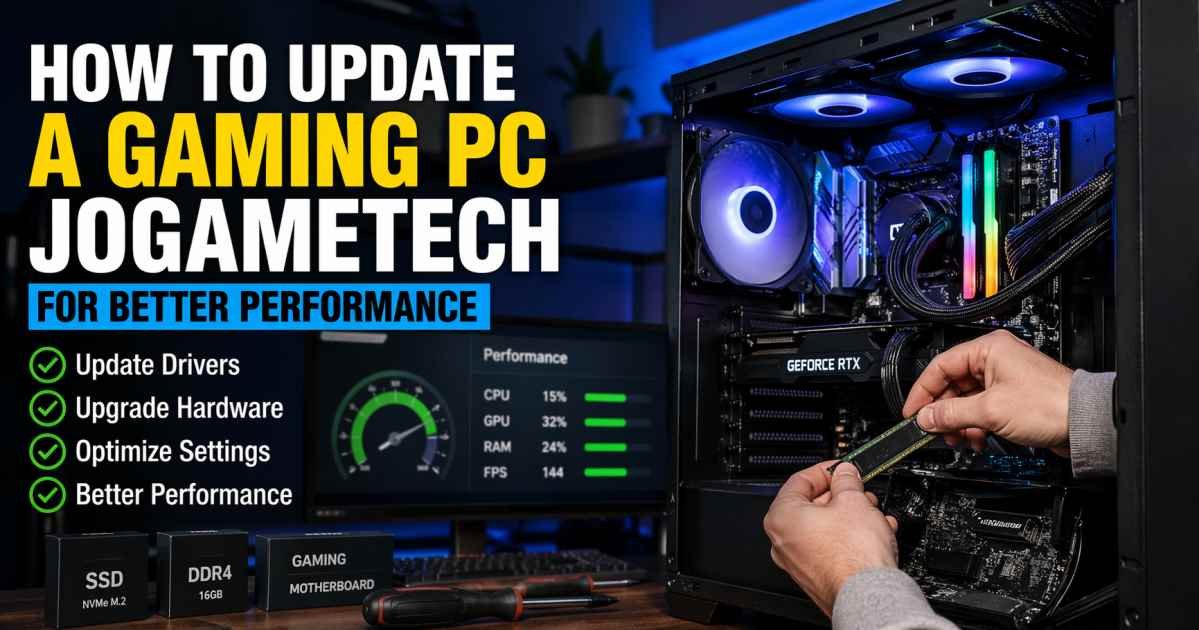
How to Update a Gaming PC Jogametech for Better Performance
Keeping your hardware in top shape is the only way to stay competitive in the fast-moving world of 2026 gaming. Whether you are aiming for high frame rates in the latest open-world titles or seeking smooth performance for professional streaming, knowing how to update a gaming pc jogametech is a fundamental skill. As games become more demanding with advanced AI integration and complex physics engines, your system requires regular maintenance and strategic upgrades to keep up with the pace of modern innovation.
The gaming landscape has shifted toward massive immersion and cloud-assisted processing. I provide a comprehensive guide to maximizing your hardware potential using the trusted ” How to Update a gaming pc jogametech approach. We will explore everything from software tweaks to critical hardware swaps while ensuring your rig remains a powerhouse for years to come.
Why Updating Your Gaming PC Improves Performance
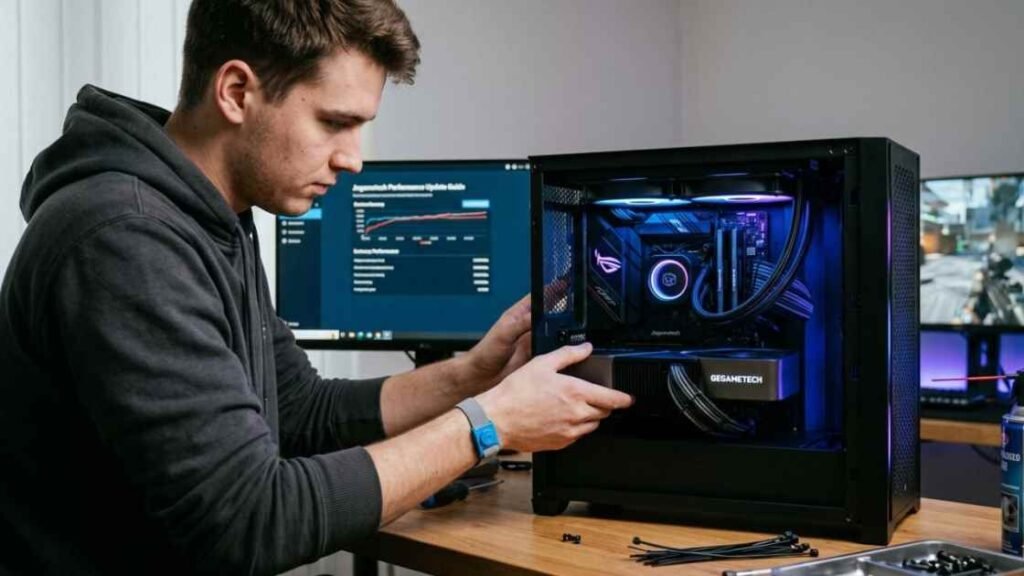
Updating your gaming computer is about more than just numbers on a screen. It is about stability and the ability to run modern software without interruptions. When you follow Jogametech’s protocols, you ensure that every component works in harmony.
- Faster Load Times: Modern games, like those mentioned in gaming news, rely on high-speed storage protocols. Updating your drivers and firmware allows your system to access data at peak speeds.
- Higher Frame Rates: GPU updates often include specific optimizations for new game releases. These patches can increase your frames per second significantly by refining how the card handles light and shadows.
- System Stability: Frequent crashes or blue screens are often caused by outdated software. Regular updates eliminate bugs that cause system freezes.
- Access to New Features: Technologies like AI frame generation and advanced ray tracing are often locked behind software updates. Keeping your system current ensures you do not miss out on the latest in gaming technology from jogametech.
Signs Your Gaming PC Needs an Update
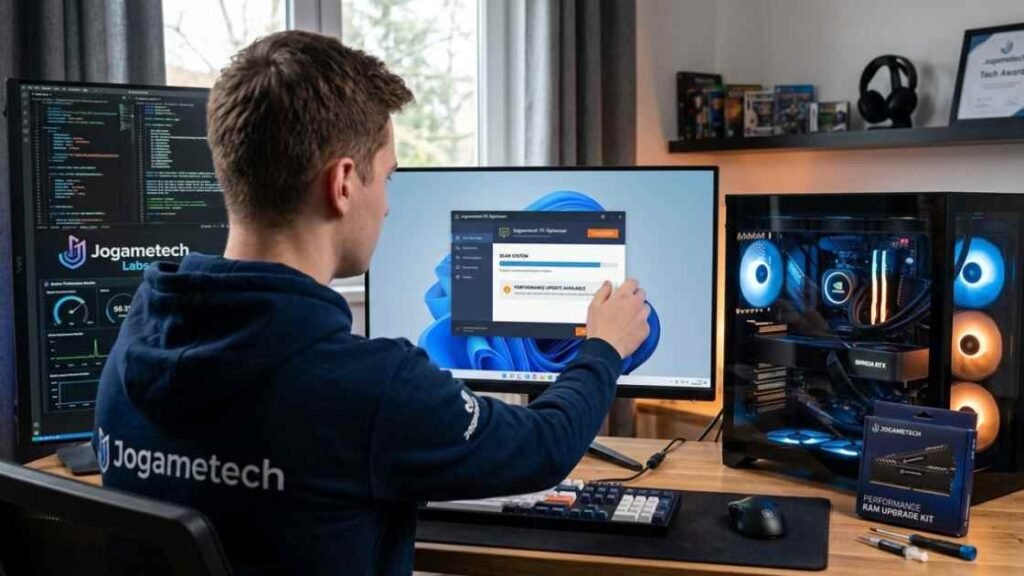
Recognizing when your system is struggling is the first step toward a better gaming experience. You should monitor your PC for these common indicators:
- Low Frame Rates: If games that used to run smoothly now feel choppy or sluggish.
- Thermal Throttling: If your fans are constantly loud and your performance drops after an hour of play, your cooling or firmware might need attention.
- Long Loading Screens: If you have enough time to make coffee while a level loads, your storage or RAM is likely the bottleneck.
- Visual Glitches: Artifacts or flickering on the screen often suggest that your graphics drivers are failing or incompatible with new game engines.
- Input Lag: A delay between your mouse click and the action on screen can be caused by outdated chipset or peripheral drivers.
Checklist Before Updating Your Gaming PC
Preparation is vital to avoid data loss or system errors. Before you begin the process of how to update a gaming pc jogametech, complete this essential checklist.
| Action Item | Description | Priority |
| Backup Data | Save your important files and game saves to a cloud service or external drive. | Critical |
| Check Power | Ensure your PC is connected to a stable power source or a surge protector. | High |
| Verify Compatibility | Research if the new update is compatible with your specific motherboard and CPU. | High |
| System Restore Point | Create a manual restore point in your operating system settings. | Medium |
| Internet Connection | Use a wired connection for large driver or system downloads to prevent corruption. | Medium |
How to Update a Gaming PC Jogametech Step by Step
The Jogametech method focuses on a logical flow that starts with software and moves toward hardware. Following this specific order prevents software conflicts and ensures a clean installation process.
- Audit Current Software: Use system monitoring tools to identify outdated drivers.
- Clear Temporary Files: Remove old cache files that might interfere with new installations.
- Update the BIOS: Start at the motherboard level to ensure your hardware can communicate effectively.
- Refresh the Operating System: Check for the latest security patches and feature updates.
- Install Graphics Drivers: Use a clean installation method to completely remove old GPU files.
- Calibrate Settings: Adjust your power plans and in-game settings to match the new updates.
Update GPU Drivers for Better Gaming Performance
The graphics card is the heart of any gaming rig. In 2026, GPU software does more than just render images; it manages complex AI tasks and upscaling technologies. According to gaming news, Jogametech, failing to update your GPU is the number one cause of poor performance in AAA titles.
- Download Manufacturer Software: Use official portals such as the NVIDIA App or AMD Software to get the latest certified files.
- Perform a Clean Install: Many installers offer a checkbox to perform a factory reset of the settings. This is highly recommended.
- Check Beta Drivers: Sometimes, experimental drivers offer massive boosts for specific new games, though they might be less stable.
- Enable Automatic Notifications: Set your software to alert you the moment a new game-ready driver becomes available.
Update Operating System and System Drivers
Your operating system acts as the conductor for all your hardware. If the OS is lagging, the rest of your components will follow suit. Updating your system drivers is a key part of how to update a gaming pc jogametech.
- Windows Update: Open the Settings menu and check for optional updates. These often include critical chipset and network drivers.
- Chipset Drivers: Visit your motherboard manufacturer’s website to download the latest chipset files. This improves the communication speed between your CPU and RAM.
- Audio and Network: Do not ignore these. High definition audio and low-latency network drivers are essential for competitive online play.
- Peripheral Firmware: Your mouse, keyboard, and headset often have their own software. Updating their firmware can reduce input latency and improve sound quality.
Hardware Upgrades That Improve Gaming Performance
Software can only do so much. Eventually, you will need to swap out physical parts to keep up with the latest in gaming technology, jogametech. Focus on these components for the biggest impact:
- Solid State Drives: Moving from an older SATA drive to an NVMe Gen 5 SSD can reduce load times from minutes to seconds.
- Memory Upgrades: In 2026, 32GB of DDR5 RAM is the recommended standard for multitasking and high-resolution gaming.
- Graphics Card: Upgrading to a modern card with at least 16GB of VRAM is necessary for 4K textures and ray tracing.
- Cooling Solutions: Adding a liquid cooler or high-static-pressure fans can prevent thermal throttling, allowing your CPU to maintain its boost clock for longer.
Optimize Settings After Updating Your Gaming PC
Once the updates are finished, you must tune the system to utilize the new capabilities. Jogametech recommends a deep dive into your configuration menus.
- Enable Game Mode: This feature in modern operating systems prioritizes system resources for the active game window.
- Adjust Power Plans: Switch your PC to High Performance or Ultimate Performance mode in the control panel.
- Set Refresh Rates: Ensure your display settings match your monitor’s maximum refresh rate. Many users forget this after a driver update.
- Turn on Re-Size BAR: This allows your CPU to access the entire GPU frame buffer at once, providing a significant boost in compatible titles.
Common Mistakes to Avoid When Updating a Gaming PC
Even experienced builders make errors. Avoid these pitfalls when learning how to update a gaming pc jogametech:
- Ignoring the BIOS: Many users update their GPUs but forget to update their motherboards. An old BIOS can limit the speed of new hardware.
- Mixing RAM Brands: Never mix RAM of different speeds or brands. This leads to system instability and crashes.
- Neglecting Physical Cleaning: Dust buildup is a silent performance killer. Clean your fans every three months.
- Using Third-Party Driver Updaters: Avoid generic software that promises to update all drivers at once. These often install the wrong versions or include bloatware.
- Overlooking the PSU: A new GPU requires more power. Ensure your power supply unit can handle the increased wattage.
How to Test Gaming Performance After Updating
You need data to prove your updates worked. Use benchmarking tools to compare your performance before and after the process.
- In Game Benchmarks: Many modern titles have built-in tests that provide a detailed breakdown of your FPS and latency.
- Synthetic Benchmarks: Tools like 3DMark or Superposition can push your hardware to its limit to ensure it is stable under heavy load.
- Temperature Monitoring: Use software to watch your CPU and GPU temps during a gaming session. They should remain within the manufacturer’s safe ranges.
- Frame Time Analysis: Look at frame time graphs. A flat line indicates a smooth experience, while spikes indicate stuttering.
Budget-Friendly Ways to Update a Gaming PC
You do not always need to spend thousands of dollars to see an improvement. There are several cost-effective ways to boost your rig:
- Overclocking: If your cooling can handle it, a small boost to your clock speeds can deliver free performance gains.
- Storage Management: Moving your most-played games to a faster drive while keeping older titles on a slower one is a smart way to manage space.
- Used Hardware Markets: Buying a previous-generation high-end card can often provide better value than a new mid-range card.
- Debloating the OS: Remove unnecessary background applications and startup items to free up system resources.
Troubleshooting Issues After Updating Your Gaming PC
Sometimes an update goes wrong. If you experience issues after following the ” How to update a gaming pc jogametech guide, follow these recovery steps:
- Roll Back Drivers: If a new GPU driver causes crashes, use Device Manager to revert to the previous version.
- Safe Mode: If your PC will not boot, enter safe mode to uninstall the problematic software.
- Check Cable Connections: Hardware updates often involve moving the PC. Ensure every cable is seated firmly in its port.
- Check Event Viewer: This system tool provides logs that explain exactly why a crash occurred, helping you target the specific fix.
Final Thoughts
Staying current with the latest trends and technical requirements is essential for any serious gamer. By following the detailed steps in this guide, you have learned the most effective ways to maintain your system. Whether you are consuming gaming news jogametech to find the next big upgrade, or simply performing routine software maintenance, consistency is key.
A well-maintained gaming PC provides a seamless gateway into the digital worlds of 2026. Keep your drivers up to date, your hardware clean, and your settings optimized. This proactive approach ensures that you spend less time troubleshooting and more time enjoying the incredible experiences that modern gaming technology offers. Remember that a fast PC is a happy PC, and with the jogametech philosophy, your performance will always be at the top of its game.